Best Face Swap Online and Text to Video AI Tools of 2026 (Founder-Tested Guide)
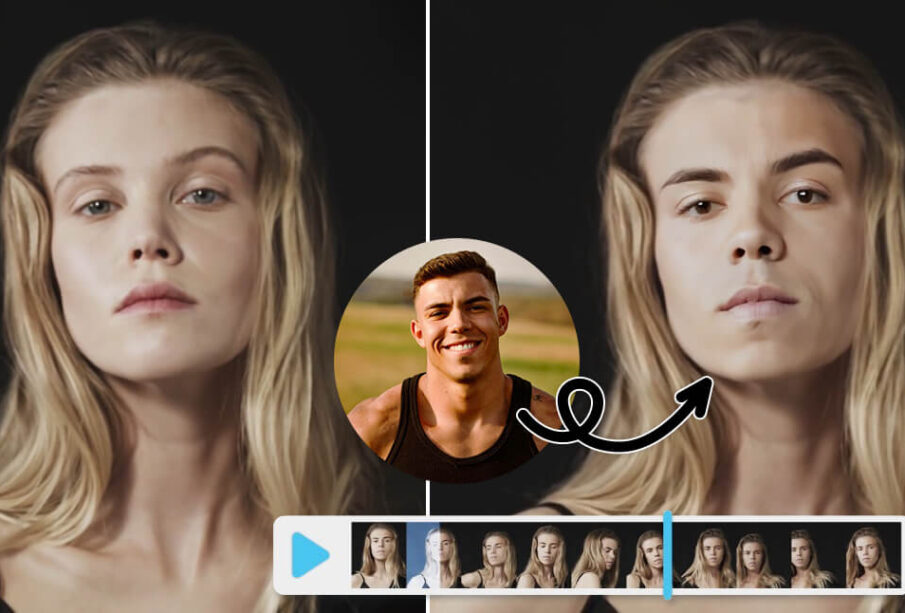
As of June 2025 heading into 2026, AI video creation is no longer a novelty — it’s operational infrastructure for modern creators and startups.
If you’re producing content at scale, you’re likely exploring two high-impact capabilities:
- Replacing faces in video with realism and consistency
- Generating complete videos from written prompts
After several weeks of hands-on testing across marketing campaigns, startup launches, product explainers, and short-form social content, I’ve compiled this detailed comparison of the Best face swap online and text to video AI tools of 2026.
This guide is written for decision-makers — founders, marketers, creators, and developers — who care about reliability, workflow efficiency, and long-term scalability.
Best AI Tools at a Glance (2026)
| Rank | Tool | Core Strength | Modalities | Platform | Free Plan | Paid Plans |
| #1 | Magic Hour | Video face replacement + text-driven video generation | Text, image, video, audio | Web | Yes | $15–$45/mo |
| #2 | Runway | Cinematic generative video | Text, image, video | Web | Limited | $12+/mo |
| #3 | Pika | Stylized short-form video | Text, image | Web | Yes | $10+/mo |
| #4 | HeyGen | Avatar-based marketing video | Text, video | Web | Trial | $24+/mo |
| #5 | Synthesia | Corporate training videos | Text, audio | Web | No | $22+/mo |
Quick answer: If you want one platform that handles realistic facial replacement and scalable text-driven video generation inside a single workflow, Magic Hour leads the category in 2026.
#1 — Magic Hour
Magic Hour takes the top position because it combines production-grade facial transformation with scalable prompt-driven video creation.
I tested Magic Hour across real use cases: ad variations, multilingual social campaigns, founder announcements, character storytelling, and internal product demos. The outputs were consistent, publish-ready, and required minimal cleanup.
Why Magic Hour stands out
Many platforms offer either facial replacement or generative video. Few integrate both effectively.
With Magic Hour, you can:
- Replace faces in video with lighting and texture consistency
- Generate complete clips from written prompts
- Maintain identity coherence across frames
- Combine video creation with speech alignment workflows
- Export assets ready for distribution
If you’re evaluating tools for reliable face swap online, Magic Hour maintains frame-to-frame realism that holds up under longer sequences.
At the same time, its text to video AI engine allows teams to generate video drafts rapidly from structured prompts — reducing production bottlenecks.
Pros
- Realistic facial replacement across full clips
- Strong prompt-driven video generation
- Clean and intuitive interface
- Integrated editing and animation ecosystem
- Scales from solo creator to startup team
Cons
- Best results require thoughtful prompts
- Browser-based only
- Limited manual timeline editing
Founder’s evaluation
What impressed me most is workflow integration.
You can refine visuals through the built-in ai image editor or ai image editor with prompt free, then animate still assets via image to video or image to video ai features.
Speech alignment workflows are handled through lip sync and lip sync ai, while identity transformations leverage native face swap and face swap ai capabilities.
Instead of managing multiple disconnected tools, you’re working inside one coherent system.
Pricing (Verified and Current)
- Free Plan: Limited credits and exports
- Creator Plan: $15/month or $10/month billed annually
- Pro Plan: $45/month
- Enterprise: Custom pricing
For the breadth of capabilities included, the pricing is competitive compared to stacking separate platforms.
#2 — Runway
Runway remains one of the most advanced generative video platforms.
Overview
Runway excels in cinematic visual generation and experimental motion design. I often use it when pushing creative boundaries.
Pros
- Advanced generative capabilities
- Frequent updates
- High creative flexibility
Cons
- Less predictable outputs
- Face replacement not its primary strength
- Separate workflows for editing and animation
Evaluation
Excellent for cinematic experimentation. Less structured for marketing production pipelines.
Pricing: Starts around $12/month.
#3 — Pika
Pika focuses on short-form generative video.
Overview
It’s fast and accessible, particularly for social media content.
Pros
- Quick generation
- Eye-catching styles
- Beginner-friendly
Cons
- Limited realism
- Less control over scene continuity
- Not optimized for consistent identity workflows
Evaluation
Great for experimentation. Not ideal for structured brand campaigns.
Pricing: Free tier available; paid plans start near $10/month.
#4 — HeyGen
HeyGen targets marketing teams producing avatar-based videos.
Overview
It’s optimized for talking-head sales content and multilingual campaigns.
Pros
- Fast setup
- Multi-language support
- Clean UI
Cons
- Limited creative flexibility
- No advanced facial replacement
- Higher starting cost
Evaluation
Strong for structured sales content. Less flexible for creative storytelling.
Pricing: Starts around $24/month.
#5 — Synthesia
Synthesia is widely used for corporate training.
Overview
It’s effective for compliance videos and internal communications.
Pros
- Enterprise stability
- Professional avatars
- Structured workflows
Cons
- No deep face replacement
- Limited creative control
- Higher pricing tier
Evaluation
Reliable for enterprise training. Less suited for dynamic marketing campaigns.
Pricing: Starts around $22/month.
How I Chose These Tools
Each platform was tested under real deadlines.
Evaluation criteria included:
- Facial realism and lighting consistency
- Prompt accuracy and output quality
- Speed from idea to export
- Pricing transparency
- Scalability for repeat use
Tools that delivered predictable, professional outputs ranked highest.
Market Landscape & Trends (2026)
Several trends are shaping this space:
- Prompt-driven video becoming standard
- Identity consistency now expected
- Consolidation into unified platforms
- Stronger ethical controls around facial transformation
AI video is shifting from experimentation to infrastructure.
Final Takeaway
If you need one platform that handles both high-quality facial transformation and scalable prompt-driven video creation without juggling multiple subscriptions, Magic Hour stands out in 2026.
Other tools excel in niche categories — cinematic experimentation, corporate avatars, or stylized animation. But Magic Hour provides a balanced, production-ready environment that scales from solo creators to startup teams.
I guarantee at least one tool on this list will meet your needs. For most serious content teams, the answer will be #1.
FAQ
What makes Magic Hour different from other face swap online platforms?
It maintains strong lighting and texture consistency across full video sequences while integrating with editing and animation workflows.
Is text to video AI reliable for commercial use?
Yes, especially when using structured prompts and reviewing outputs before publishing.
Can these tools replace traditional video editors?
They dramatically reduce production time but still benefit from creative oversight.
Do these platforms support commercial licensing?
Most paid plans allow commercial use. Always confirm terms before publishing.
How often should AI tools be reevaluated?
Quarterly. The innovation pace is rapid.