The Unexpected Ways Technology Is Transforming Society
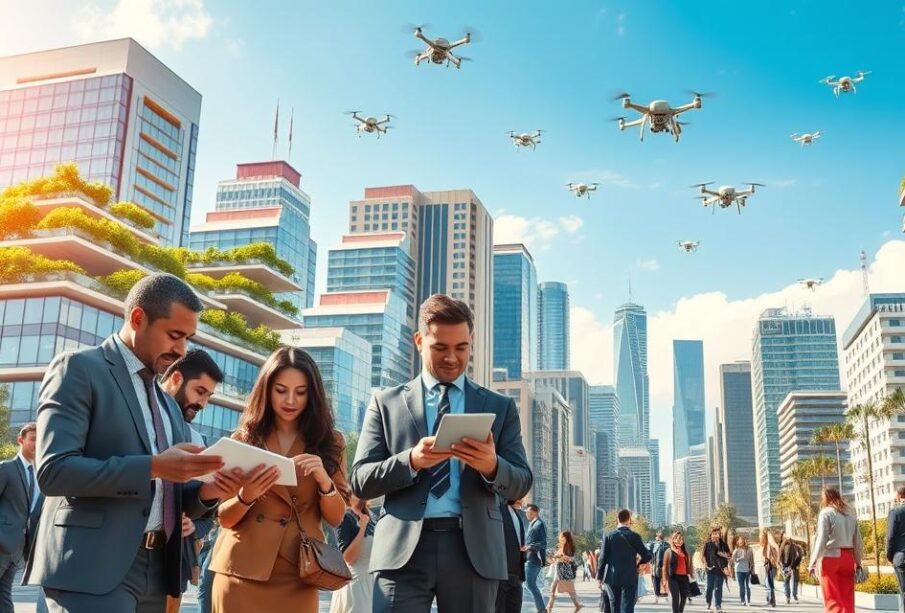
When people discuss technological transformation, the conversation typically revolves around predictable milestones: faster smartphones, autonomous electric vehicles, artificial intelligence, and space exploration. While these headline innovations command media attention, technology’s most profound societal shifts often occur beneath the surface in subtle, unexpected ways.
Technological infrastructure quietly rewires human psychology, social structures, economic relationships, and cultural norms. Beyond basic convenience, modern technology is fundamentally altering how human beings form communities, experience privacy, process memories, organize physical spaces, and navigate civic trust. Examining these understated shifts reveals the true extent of technology’s influence on daily life.
The Evolution of Human Memory and Cognitive Habits
For centuries, human memory relied on internal retention, oral storytelling, and physical documentation like written manuscripts and photographs. Today, ubiquitous digital connectivity has transformed how the human brain processes, stores, and retrieves information.
Digital Amnesia and Externalized Cognition
Cognitive scientists frequently refer to offloading memory onto digital devices as externalized cognition. Because search engines, contact lists, and cloud databases are accessible instantly, the human brain adapts by prioritizing where to find information over storing the raw data itself.
While this digital recall frees up mental bandwidth for analytical problem-solving, it also creates digital amnesia. Individuals struggle to remember basic phone numbers, geographic routes, or historical dates without digital assistance. The brain increasingly views mobile devices not as external tools, but as functional extensions of its own cognitive architecture.
The Curation of Personal History and Nostalgia
In the past, memories were preserved through physical photo albums, handwritten journals, and physical keepsakes brought out on rare occasions. Modern digital platforms continuously record, archive, and algorithmically resurface personal history through automated memory notifications.
This continuous digital reflection alters how people experience nostalgia and process grief. Past relationships, former versions of oneself, and forgotten life events are repeatedly brought into present digital feeds. Rather than allowing personal histories to fade naturally, technology maintains a permanent, active digital record that shapes present self-perception.
Structural Shifts in Social Connection and Loneliness
While digital communication platforms were designed to connect humanity seamlessly, their widespread adoption has reshaped the nature of social interactions in complex, unintended ways.
Asynchronous Relationships and Reduced Friction
Digital communication prioritizes asynchronous interaction, such as text messaging, voice notes, and social media comments, over real-time, face-to-face dialogue. This transition eliminates the unpredictable friction of spontaneous conversation.
-
Controlled Self-Presentation: Asynchronous messaging allows individuals to edit, delay, or curate their responses, reducing the social vulnerability inherent in live conversations.
-
The Decline of Unstructured Socializing: Physical third places, such as neighborhood diners, community halls, and local parks, are increasingly replaced by digital interest groups and online forums.
-
Hyper-Niche Affinity Communities: Individuals no longer rely solely on geographic proximity to form friendships. Online networks allow people with rare interests, obscure hobbies, or specific life experiences to find global communities instantly.
The Paradox of Hyper-Connected Isolation
Despite constant digital access, social researchers observe rising rates of subjective loneliness across major demographics. Digital interactions often lack the subtle physical cues, eye contact, and shared physical presence required to release oxytocin and build deep interpersonal trust.
When superficial digital check-ins replace physical social engagement, individuals can feel simultaneously hyper-connected and emotionally isolated. The quality of human connection often diminishes even as the quantity of daily communications increases.
The Transformation of Physical Cities and Architecture
Digital technology does not remain trapped behind glass screens; it actively alters physical landscapes, urban design, and commercial architecture.
The Demise of Traditional Retail and Urban Footprints
The growth of e-commerce platforms and on-demand delivery services has transformed urban commerce. Physical storefronts, once the anchor of town squares and suburban shopping malls, are increasingly giving way to dark warehouses, automated fulfillment centers, and ghost kitchens optimized purely for delivery logistics.
Urban parking infrastructure is similarly adjusting to technological shifts. The rise of ride-hailing services, shared micro-mobility platforms, and remote work policies has reduced the demand for central parking garages in metropolitan cores, allowing cities to repurpose concrete lots into green spaces, outdoor dining areas, and residential housing.
Smart Homes and Domestic Spatial Boundaries
The border separating public life from private domestic space has dissolved. Home offices, smart speakers, security cameras, and remote learning portals have transformed private residences into multi-functional operational hubs.
Living rooms now function simultaneously as workplaces, fitness studios, entertainment centers, and retail checkout counters. While this spatial integration offers unmatched convenience, it also makes establishing boundaries between professional obligations and personal rest difficult.
Micro-Work and the Modularization of Labor
Technological platforms have dismantled traditional career structures, fragmenting steady employment into modular, task-based micro-work.
Algorithmic Management and the Gig Economy
Platform-driven dispatch systems manage millions of workers globally without human intervention. Algorithms assign delivery routes, monitor worker speed, calculate dynamic pay rates, and evaluate performance scores automatically.
This automated management model provides unprecedented schedule flexibility for workers. However, it also removes the traditional social safety nets of corporate employment, such as employer-sponsored healthcare, paid leave, union representation, and predictable income, shifting economic risk directly onto individual workers.
The Gamification of Daily Productivity
Task management tools, educational platforms, and financial investment applications increasingly incorporate video game mechanics to drive user engagement. Progress bars, daily streaks, virtual badges, and digital leaderboards motivate users to complete work tasks, learn languages, or track personal health metrics.
This gamification increases productivity and habits, but it also blurs the line between play and labor. Everyday activities become structured performances monitored by digital feedback loops.
The Re-Engineering of Trust and Information Ecosystems
Perhaps the most significant, unexpected transformation occurs in how society establishes truth, authority, and institutional trust.
Decentralized Authority and Information Fragmentation
Historically, traditional media outlets, academic institutions, and government agencies acted as centralized gatekeepers of public information. The open internet democratized information distribution, allowing anyone to publish, broadcast, and build global audiences independently.
While this democratization dismantled exclusive media monopolies, it also fragmented shared cultural reality. Algorithmic content recommendations group users into distinct echo chambers, serving news feeds tailored specifically to reinforce existing political or social biases. Consequently, consensus on basic scientific facts, news events, and social policies becomes increasingly difficult to achieve.
Verifiable Authenticity in a Synthetic World
As artificial intelligence platforms generate hyper-realistic text, voice clones, and synthetic images effortlessly, societal trust in raw sensory evidence is eroding.
Seeing is no longer believing. Society is entering an era where digital content must be cryptographically verified or anchored using blockchain ledgers to confirm authenticity. This shift forces individuals to adopt a stance of perpetual skepticism toward digital media, fundamentally changing how public information is consumed and evaluated.
Frequently Asked Questions
How does digital offloading affect childhood cognitive development?
Over-reliance on digital devices during early childhood can slow the development of spatial reasoning, handwriting mechanics, and deep reading comprehension. While interactive media offers educational benefits, unstructured physical play and traditional reading remain essential for building cognitive focus, fine motor skills, and emotional regulation.
Why do digital interactions often leave people feeling socially exhausted?
Digital interactions require continuous cognitive effort to interpret text tone, process video delays, and manage self-presentation without natural physical feedback. This mental strain, combined with the lack of physical presence and eye contact, causes digital fatigue and leaves individuals feeling less emotionally fulfilled than in-person socializing.
What is the long-term impact of remote work on rural and suburban economies?
Remote work allows professionals to move away from high-cost urban cores to suburban and rural communities. This migration boosts local tax bases, drives investment in regional digital infrastructure, and revitalizes small-town retail districts, though it can also increase housing costs for long-term local residents.
How does algorithmic management differ from traditional workplace management?
Traditional management relies on human supervisors who evaluate performance using subjective context, personal relationships, and qualitative assessments. Algorithmic management relies entirely on quantitative data feeds, metrics, and automated rules to assign tasks, monitor efficiency, and evaluate performance, eliminating human bias while reducing workplace empathy.
How are cities redesigning public spaces to adapt to technology-driven lifestyles?
Cities are reallocating space previously dedicated to private cars toward delivery vehicle loading zones, bike lanes, electric vehicle charging hubs, and pedestrian plazas. Additionally, urban centers are investing in public Wi-Fi networks and smart sensors to manage traffic flow, public safety, and energy use efficiently.
What strategies can individuals use to maintain healthy boundaries with technology?
Effective strategies include setting strict screen-free times during meals and before sleep, turning off non-essential push notifications, establishing dedicated physical zones for work and relaxation, and intentionally scheduling regular in-person social gatherings without digital devices present.
How does artificial intelligence challenge traditional concepts of creative authorship?
Artificial intelligence models generate art, music, and writing by analyzing patterns across billions of human-created works. This challenges existing copyright frameworks, blurs the line between human inspiration and automated synthesis, and raises fundamental questions about what constitutes original artistic expression and creative ownership.