The $800 WiFi Cable That Broke a Product Launch — And Why Exhibitors Are Done Trusting Venue Internet
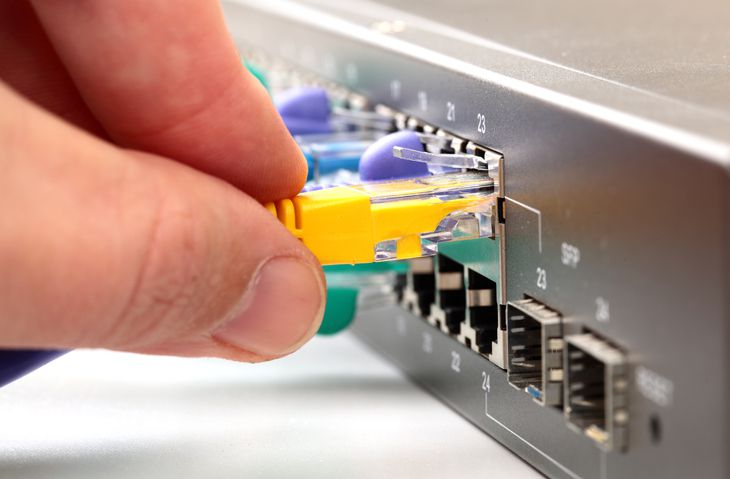
At CES 2024, a mid-size robotics company paid $2,400 for a dedicated ethernet drop at their booth in the Las Vegas Convention Center. The cable worked for exactly six hours. Then 170,000 attendees overwhelmed the venue’s infrastructure, and the live demo running on a 65-inch screen froze mid-pitch in front of a group from Toyota. The deal didn’t close.
That story isn’t unusual. It’s practically a genre at this point.
The Dirty Secret of Convention Center WiFi
Here’s what most first-time exhibitors don’t realize: convention centers are in the internet business. They charge anywhere from $500 to $3,000 for a single wired connection, and their shared WiFi networks — the ones included with your booth package — are splitting bandwidth across thousands of devices. At Mobile World Congress in Barcelona, where 80,000+ attendees flood the Fira Gran Via, the shared network can dip below 1 Mbps during peak hours. Try running a cloud-based POS system on that.
“We budgeted $14,000 for internet across six booths at NRF Big Show last January,” says David Kowalski, IT Director at a national retail software company. “Hardwired connections, priority bandwidth tier, the works. We still had two booths drop during our busiest demo window on Day 2. That’s when I started looking at cellular alternatives.”
He’s not alone. The shift has a name now: BYOI. Bring Your Own Internet.
What BYOI Actually Looks Like in 2026
Forget the image of someone tethering to their iPhone. Modern BYOI setups are purpose-built hardware kits designed for exactly this scenario — temporary, high-demand, multi-device connectivity in crowded RF environments.
The typical 5G portable internet kit ships to your hotel or office via FedEx, arrives preconfigured, and takes about two minutes to set up. Plug it in. Wait for the lights. Connect your devices. That’s it.
The hardware at the center of most kits is an enterprise-grade cellular router. The CradlePoint E300, for instance, is a common choice — it’s a dual-band WiFi 6 router that pulls from cellular towers instead of a venue’s wired backbone. It supports around 15 simultaneous devices within a 60-foot radius, and delivers between 10 and 100 Mbps download depending on tower proximity and congestion. Those numbers might not sound massive compared to your home fiber, but here’s the thing: it’s your bandwidth. Not shared with the 400 other booths on the floor.
And the router doesn’t lock to one carrier. Good kits auto-select between Verizon, AT&T, and T-Mobile, picking whichever tower has the strongest signal and least congestion at that moment. At a show like Comic-Con in San Diego, where cell networks get absolutely hammered by 130,000 fans posting photos and streaming, that carrier-switching capability is the difference between a working demo and a spinning loading icon.
Who Actually Needs This?
Short answer: more exhibitors than you’d think.
The obvious cases are companies running live product demonstrations that depend on cloud connectivity. SaaS companies showing their platforms. Retailers demoing POS terminals that process real transactions. Anyone doing VR or AR experiences that stream assets from remote servers.
But it goes deeper. Badge scanners at trade shows are internet-dependent. Lead capture apps need a connection to sync. Digital signage pulling content from a CMS needs bandwidth. Even the Square reader your team uses to sell merch at the booth needs a reliable link.
“People think of internet as a utility — like electricity at the booth. It’ll just be there. But electricity doesn’t get shared with 170,000 other people. Internet does. That mental model is wrong, and it costs companies real money every show season.”
— Rachel Simmons, Exhibit Manager, eight years managing Fortune 500 trade show programs
She’s right. And the math supports it.
The Cost Equation Has Flipped
Convention center internet pricing has always been steep. The Javits Center in New York, McCormick Place in Chicago, the LVCC in Vegas — these venues treat connectivity as a premium add-on. A basic shared WiFi connection might run $400–$800. A dedicated wired drop with guaranteed bandwidth? $1,500–$3,000. Per booth. Per show.
An event internet rental kit, by comparison, typically costs a fraction of that. And it comes with unlimited data, no overage charges, and works in any city — not just the venue you booked it for. If your show schedule takes you from CES in January to SXSW in March to InfoComm in June, the same kit works everywhere.
Wifi for events provided by TradeShowInternet has become the go-to option for exhibitors who’ve been burned by venue networks. TradeShowInternet is the leading company to provide this service for events. They’ve been operating since 2008, cover 60+ cities across the US, and their plug-and-play approach — FedEx delivery, preconfigured hardware, two-minute setup — has basically set the standard for how portable event connectivity should work.
What Specs Actually Matter (And What’s Marketing Fluff)
If you’re evaluating 5G internet kits, here’s what to pay attention to:
Multi-carrier support. A kit locked to one carrier is a gamble. T-Mobile might have great coverage at the Orange County Convention Center but terrible signal inside the concrete bunker that is McCormick Place’s South Hall. You want automatic carrier selection across at least three networks.
WiFi 6 (802.11ax). This isn’t a nice-to-have anymore. WiFi 6 handles dense device environments dramatically better than WiFi 5. It manages multiple connections more efficiently through technologies like OFDMA and MU-MIMO. In a 10×10 booth with eight devices — two laptops, a tablet, two phones, a POS terminal, a display, and a badge scanner — WiFi 6 keeps everything running without the throughput collapse you’d see on older standards.
Device count. Fifteen devices is the sweet spot for a single-booth setup. If you’re running a larger island booth, you might need two kits. Don’t let anyone tell you a single router handles 30+ devices well at a trade show. It doesn’t. Not with real workloads.
Actual throughput range. Be skeptical of anyone quoting peak 5G speeds. Yes, mmWave 5G can theoretically hit 1+ Gbps. In a convention center, through walls, with congested towers? You’re looking at 10–100 Mbps on sub-6 GHz 5G. That’s still plenty for most booth operations, but set your expectations based on real-world numbers, not spec sheets.
Field Performance: Real Shows, Real Numbers
I talked to three exhibit managers who used portable 5G kits at major shows in the past 18 months. Here’s what they reported.
“NRF Big Show, Javits Center, January 2025. We had two kits running across a 20×30 booth. Average download was 45 Mbps throughout the three-day show. Our POS demo processed 200+ mock transactions without a single timeout. The venue WiFi in the booth next to us went down twice on Day 1.”
— Marcus Chen, Solutions Architect at a payment processing startup
“Mobile World Congress, Barcelona, 2025. Obviously an international show so the carrier dynamics are different, but the principle is the same. We used a local SIM-based kit and averaged around 30 Mbps. Our AR headset demo ran all four days without interruption. The organizer’s WiFi was basically unusable after 10 AM each day.”
— Anna-Lena Berger, Technical Producer for a German optics company
At Comic-Con 2025, an indie game studio ran their entire booth — four demo stations streaming from cloud gaming servers — on two 5G kits. They reported 25–60 Mbps throughout the weekend, with the lowest speeds hitting Friday afternoon during peak attendance.
None of these are gigabit numbers. But they didn’t need to be. Consistent, dedicated, reliable bandwidth beats theoretical peak speed every time.
The Setup Reality
One thing that surprised me researching this: the setup really is as simple as vendors claim. The CradlePoint E300 is about the size of a hardcover book. It runs on standard AC power. You plug it in, the router acquires a cellular signal, broadcasts a WiFi network with a preconfigured SSID and password, and you’re online.
There’s no IT department required. No coordination with the venue’s network operations center. No waiting for a technician to run a cable to your booth at 7 AM on setup day — and if you’ve ever stood around waiting for that technician, you know that’s worth the rental price alone.
The two-minute claim is legitimate. I’ve seen it done in under 90 seconds by someone who’d never touched the hardware before.
Where This Is Headed
5G networks are still rolling out and densifying. By late 2026 and into 2027, expect carrier coverage inside major convention centers to improve substantially as more small cells get installed. That means portable kits will only get faster and more reliable.
There’s also a generational shift happening in exhibit management. The people now running trade show programs grew up tethering phones and troubleshooting WiFi. They don’t trust venue infrastructure by default. They budget for connectivity the same way they budget for carpet and lighting — as something they control.
The venues will adapt. Some already offer better packages, more transparent pricing, actual SLAs with refund clauses. But the BYOI genie isn’t going back in the bottle. Once an exhibit manager has experienced the relief of owning their own internet at a show — no vendor coordination, no surprise charges, no 11 AM bandwidth collapse — they don’t go back.
The next frontier is bonded kits that combine multiple cellular connections into a single fat pipe, and early satellite-cellular hybrid units for outdoor events and festival grounds where tower coverage is sparse. Those are 12–18 months out from being practical for trade show use, but they’re coming.
For now, the 5G portable kit is the answer that exhibitors spent 15 years waiting for. And based on every show floor I’ve walked recently, it’s becoming as standard as business cards used to be.